
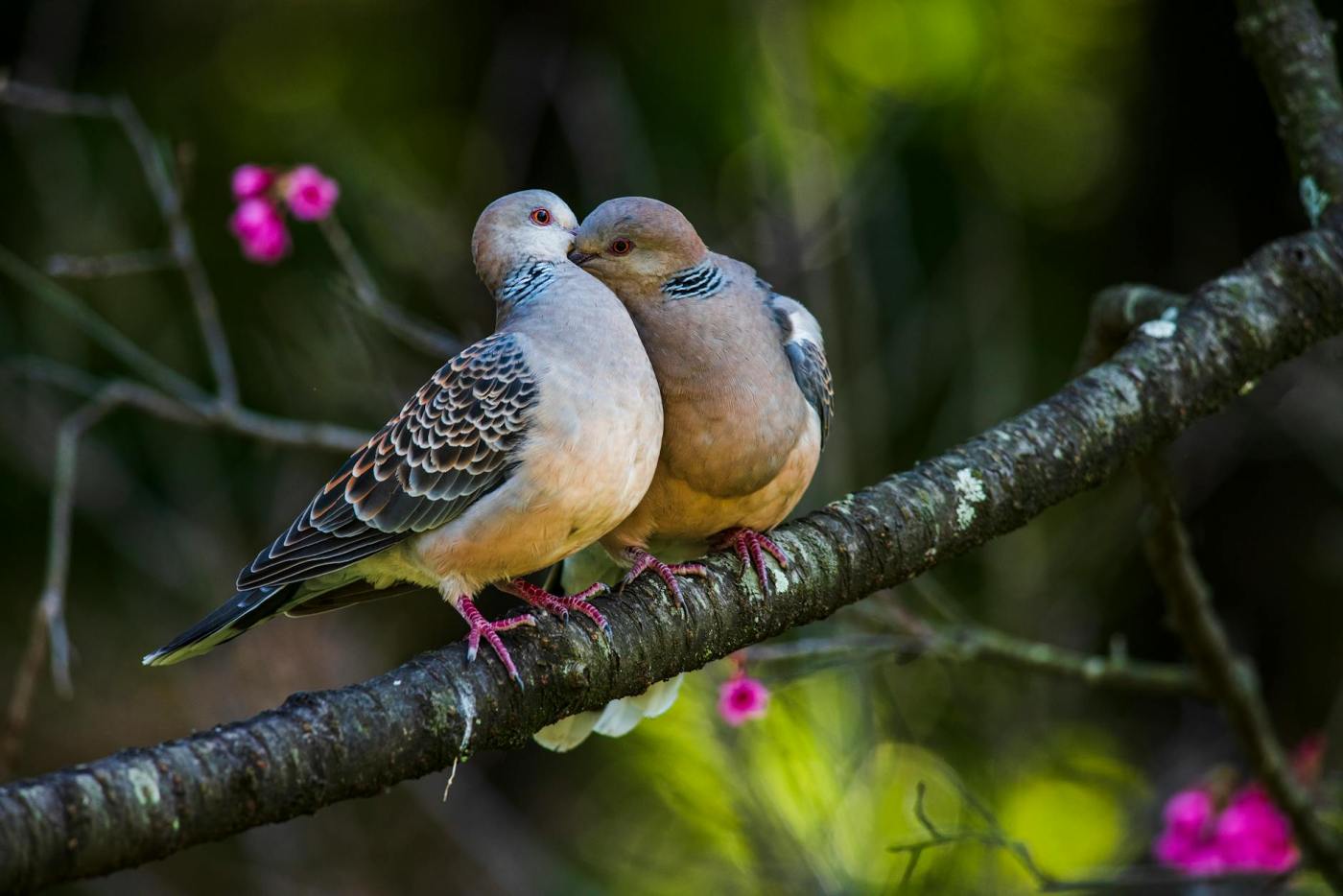
Turtle Doves sound like a made up beast from Avatar the last air bender or an original monster from the D&D Monster manual, but it is in-fact a real bird. T’is a Dove. They’re really rear in the UK, but you might see them around in places like Yorkshire and Kent during the spring.
A little heads up for any non UK or non native English speakers, the difference between Doves and Pigeons isn’t a phylogenetic one, it’s a linguistic one. So if you look at the families and species of all the pigeons and all the doves there wouldn’t be a significant genetic difference between species that we (English speakers), have labelled as Doves and those we’ve labelled as Pigeons, it’s not even a case of one being domesticated and the other being wild species. Doves do have better PR than pigeons though.
Turtle Doves were once common in the UK but what you must remember is the ecology of the UK is F- less than ideal. They aren’t hardy birds, so they migrate to the South Sahara for the winter and then come back to Eurasia for breeding. Why they dissipated in the first place is varied. During the 1960s especially, farming became more and more commercial, this ate into a lot of habitat. If you are a city creature, you might not see the difference in the countryside between farmland and other habitats. Commercial Farmland is monoculture, and easily becomes ecologically barren, if you stand in the middle of huge commercial farmlands you’ll notice how quiet everything is. No doves, no insects. Eggs found on farmland used to be taken out during this time, because the focus was on food production, possibly part of a reaction to the aftermath of world war two. A lot of species became endangered or died out completely in the mid 1900s. Largely driven by keeping crops and livestock “safe” and habitat loss. What is being attempted now, is more sustainable farming techniques. Fewer pesticides, more areas for wildlife such as hedgerows, larger buffer zones. Allowing for wildlife to have a better foothold, including Turtle doves.
So finding two of them truly is a gift, although seeing them in winter in a bit odd.
 Wonderfully Weird