
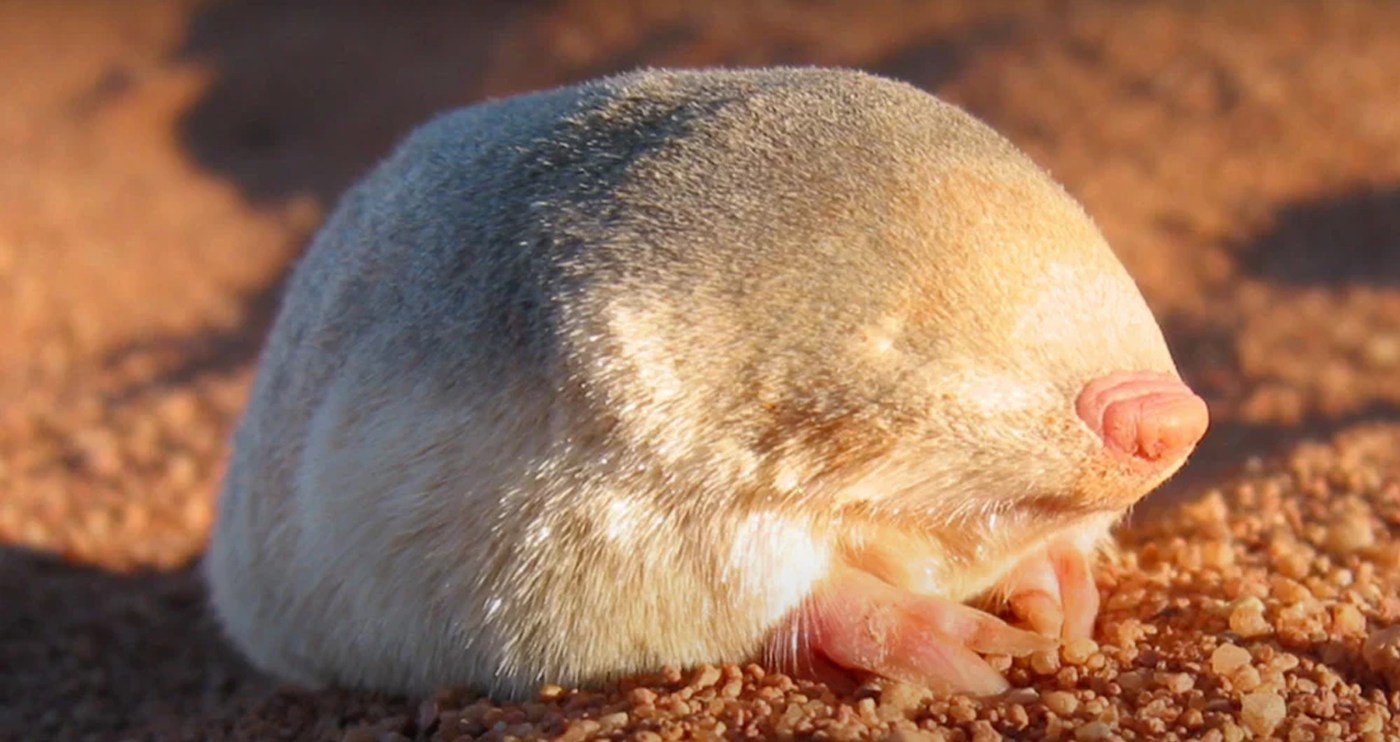
We’re heading away from Europe for this one, to the warm sands of the sub-sahara in Africa. There are actually 21 species of these little guys, but most of them are endangered and all of them are hard to find so you can forgive your love for only bringing you five.
The reason I am including these little fellas is because I need to get something off my chest. This knowledge has been eating away at my fleshy little mind for years, and I need the masses to know. You may also know this, in which case you can join me in the catharsis.
Golden moles, the mole shaped moles that dig through sand in a mole like way, with little twitching mole noses are not moles.
Let me explain. So these little guys are products of what we would call convergent evolution, because animals tend to adapt to environments in certain ways because those adaptions are successful, you end up with some species who live in similar environments or occupy similar niches evolving similar morphologies despite the fact they haven’t shared a common ancestor for 100 million years. There’s even a marsupial mole like critter who hasn’t shared an ancestor with either the golden moles of the true moles for 150 million years.
So, out of the true moles (Talpidae), the fake golden moles (Chrysochloridae) and the sneaky pocketed marsupial moles (Notoryctemorphia) why should you choose the golden mole to give to your love? Especially when Eurasian common moles are in decline across Britain, and are, in my humble and entirely unbiased opinion, little velvety gems.
Golden moles are fancy little critters, their golden descriptor is not just empty praise. Their fur is iridescent. They sparkle in moonlight should they choose to surface. Why? Because they are fabulous. Because these little light benders deserve some appreciation. And now you have a cool animal fact to share at the dinner table.
 Wonderfully Weird