
T’is the season of ice and snow, unless you’re Australian in which which case get away from me with that toasty Christmas witch craft, the only redeeming quality being one lovely Christmas song by Tim Minchin that tricked everyone into thinking the Southern Hemisphere should have Christmas in December. I digress.
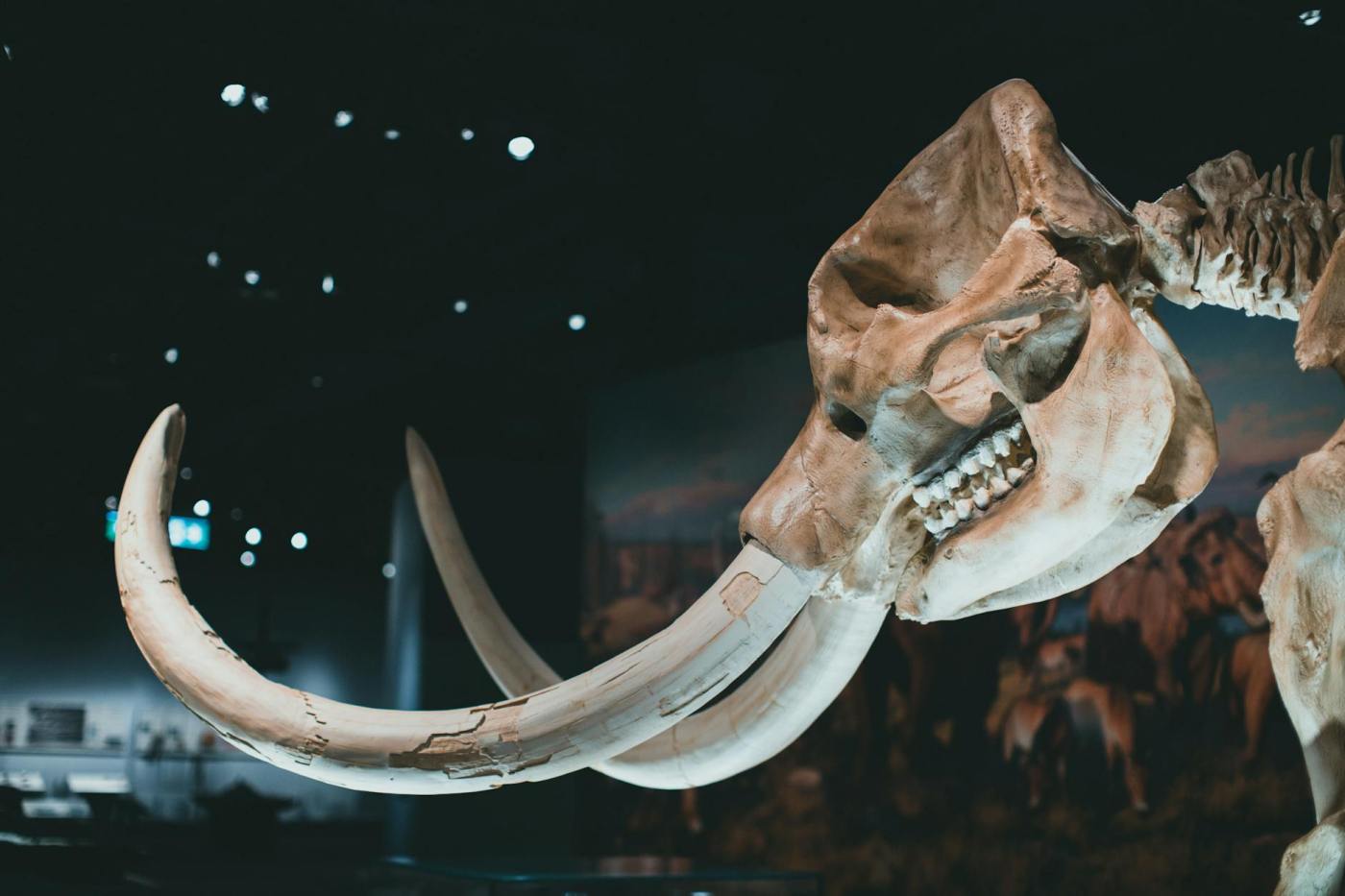
T’is the season for ice and snow. So, naturally I’ve been researching ice age mega fauna for fun, and I have come across something that disgruntles me. There is a definition for what counts as a mega fauna in zoology and I think it’s terrible. The main definition is that an animals over 50kg is a mega fauna. Humans are mega fauna, even me in my tiny 5ft 1 (1.5m) is a mega fauna. Fallow deer are mega fauna. This doesn’t feel intellectually correct. We have an idea as to what mega fauna are. Mammoths, definitely. Woolly Rhinos, of course. Stepping away from the ice age you have Megalainia (Giant lizard), and Megaladapidae (Giant lemur). All of these we can agree are mega fauna, they look like mega fauna they lived during an age we all agree contained mega fauna. But if a 6kg rat is discovered it isn’t a mega fauna, it is just a big rat.
I want a better definition and since there isn’t the same history of collective understand to what the cut off point is that say the separation between birds, reptiles and dinosaurs have, I think it’s very possible to create a newer, more robust definition that is scientifically accurate and includes all the favourites.
My list of demands follows thusly:
– They need to be big relative to other species in their genera. A moose would be a mega fauna, along with the extinct megaloceros, but a fallow or red deer would not, since deer come in a variety of sizes. This would also lead us to looking at their phylogenetics and how they relate to other animals in their clade, because in this day and age phylogenetics should be taken into account. A 50kg newt is a monster (said with all the love in the world), a 50kg elephant is adorable and be given all the comforts and wrapped up in a blanket. Basically we need to work off a percentage based cut off rather than a particular weight category.
– Timing. Mega Fauna are all considered to be this side of the K2 extinction. We don’t have any dinosaurs in our minds, except the birds that descended from them, I can’t imagine many people would object adding the Moa and Haasts eagle to the list. But, how far back do we really need to go? Are we only looking at species from the Holocene or from the Cenozoic as a whole. Most of us think of species that interacted with humans, maybe not homo sapiens souly, but certainly species that were closer to us than those more apelike homonins. This would put our time bracket between present day and the Quaternary 2.58 million years ago.
– I don’t think we should think of Mega Fauna as extinct. There are truly enormous animals in our world, an Amur Tiger could kill a bear, a polar bear is one of the biggest mammalian predators we have a record of, moose, elephants and rhinos are all relevantly accepted examples of the last surviving mega fauna. So being extinct shouldn’t be a pre-requisite. I like to remind people that the wonders of the world didn’t end with the ice age, especially when there is a degree of relatedness with extinct species.
These are just the barest of bones to solve a very mild frustration I have. I may wake up tomorrow and decide that the definition of an animal over 50kg with a vague time frame of living during the Cenozoic, is completely fine and there are other more important definitions to worry about. Like what a species is. But if this stays in my brain, this will not be the last you hear about the Mega Fauna “problem”. Wish me and my fragile psyche the best have a lovely Christmas if you celebrate and lovely day if you do not.
Throw a like at this if you want to here a more detailed, less unhinged manifesto.
 Wonderfully Weird