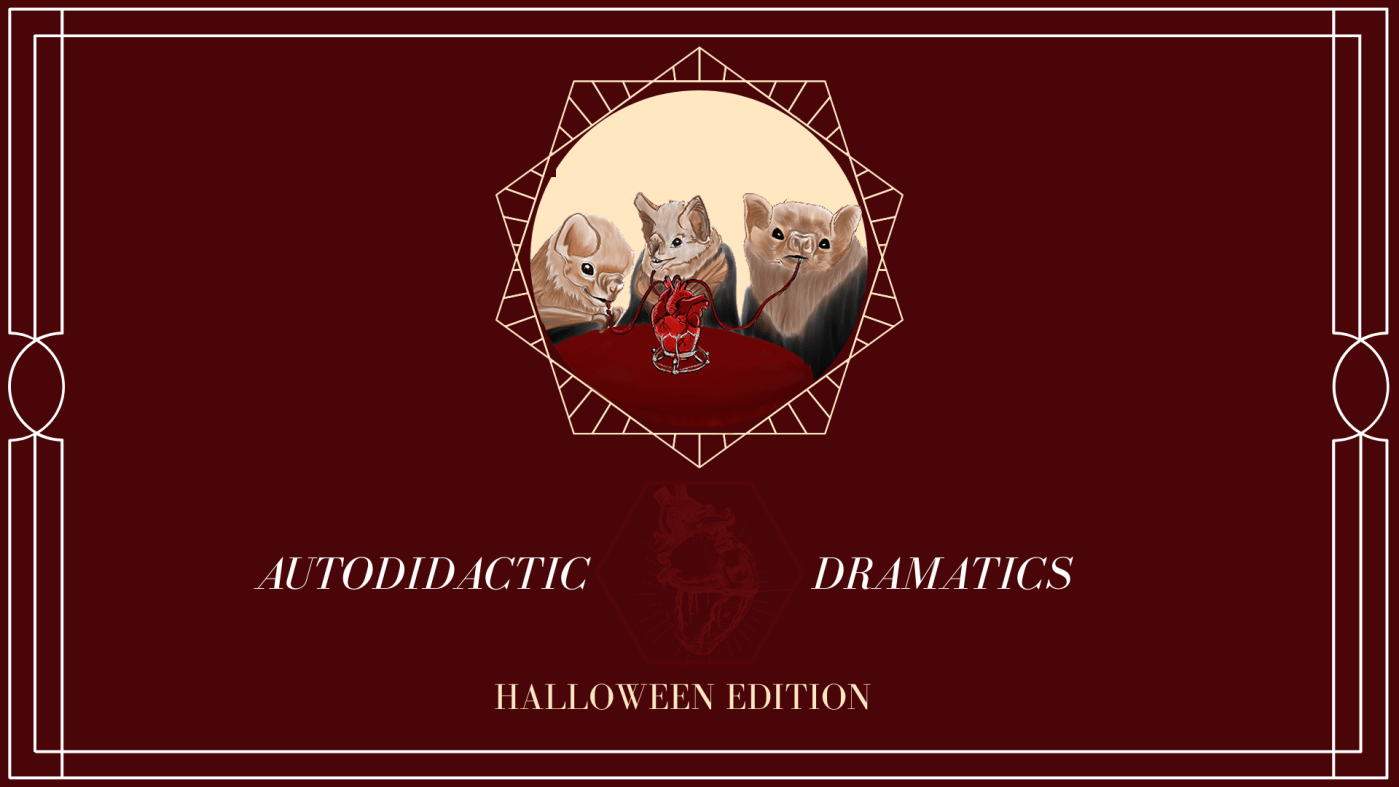
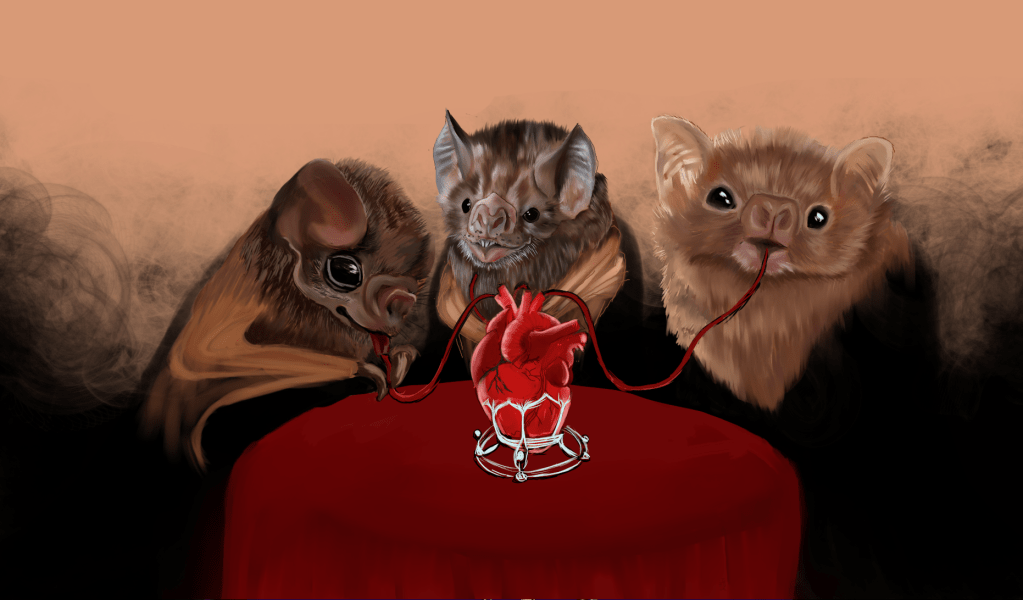
From the mysterious Mammalia class of Central and South America. One that has flittered through literature 29 years longer than Dracula. This charming Chiroptera belongs to the fascinating family of Phyllostomidae, bringing with them 20 million years of adaptations. Which you, as a 14 million-year-old Hominidae clearly need. Let Desmodontinae introduce you to the sophistication of vampires. No curses required. No betrayals necessary. You are born into being as one of three, the most researched (Desmodus rotundus), the one with five limbs (Diphylla spix), and one that flys on pale wings (Diaemus youngi). Let’s turn you into a creature of the night.
Adaptive traits and the myths they made along the way
Fifty-one million years of genetic silliness, otherwise known as evolution, has made Chiroptera one of the most diverse orders in mammaldom. The co-occurrence of neutral mutational bias towards Cytosine, and selective changes in both nucleotides and amino acid sequences are the reason for this silliness. Desmodontinae is a specialist and perfect to modal your new self on. With adaptations written into the DNA of your new form, adaptations so precise and unbelievable that a variety of mysterious magics and macabre mythologies have woven their way around you. So, what nocturnal denizens have been influenced by you or share your traits?
The most obvious and most recent is the Chupacabra. Animalistic and known for draining the blood of livestock, (specifically goats), this is a lesson on stealth. If people are more likely to believe it was a spiny bear-sized legend than your under-10-centimetre self. Ya’ fine.
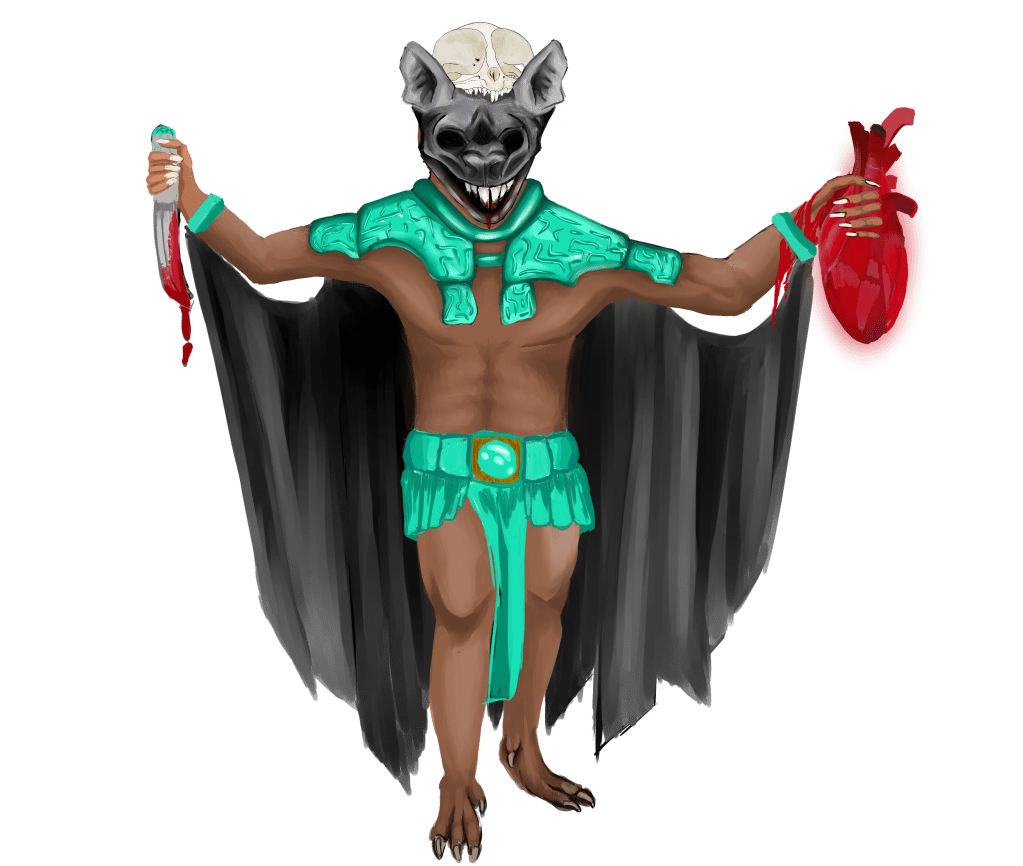
Skirting away from this plane of existence is also an option. Abandon the caves and tree hollows that are traditionally home to Phyllostomidae in general and take a trip to the underworld Xibalba. There you shall find the original Batman Camazotz, who gifted humankind with fire. A humanoid beast from Mayan mythology, shrouded in bat wings and affiliated with them. And Death, of course.
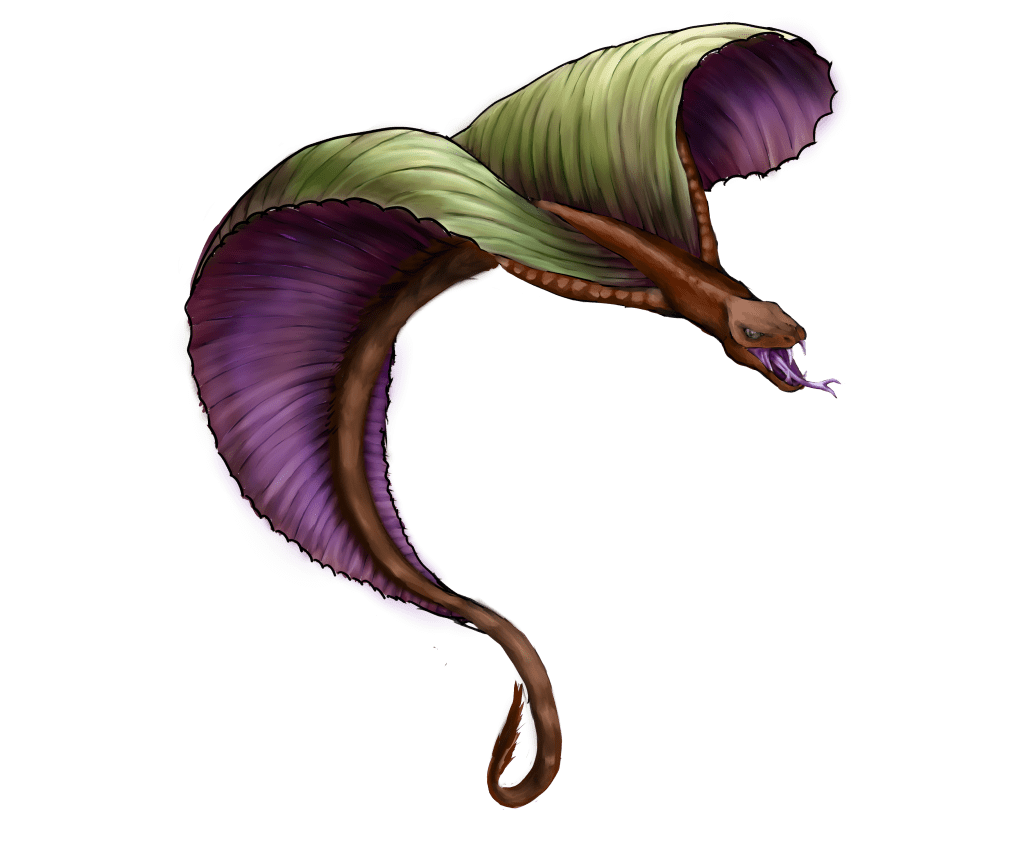
If mammals aren’t your thing and you remain unimpressed with the Vampire bat’s distinctly low kill count then perhaps the Peuchen will satisfy you. Far from the harmless and rarely lethal echolocation of bats this flying serpent from Chilean legend was said to paralyse observers with an eerie whistle and swoop down to drain their blood. You are capable of directing loud precise airflow through your larynx, listening to changes in sound with those magnificent ears. Not quite as grand.
Being burnt by daylight is not a concern. Just that it’s bright, hunting would be hard, so it’s time to go to bed and wait for the sun to go-away. Or in the case of the Surinamese Azeman, turn into a beautiful woman. Standard shape-shifter stuff. She is death on two legs. she will break the law, take the money and become a blood-sucking beast by night. You may even bump into her since you share nocturnal hunting habits. She, however, needs to don a cloak of dried animal skin, you only need to spread those wonderful membrane wings that stretch between your limbs and elongated fingers. Except ya’ thumbs. You need those.
An adage to live by is; “there’s always witchcraft”. Here I give you Tlahuelpuchi, with roots deep in Aztec culture, she (sometimes he), is another shape-shifter. Feeding on the blood of infants for sustenance. Humans are tricky and perceptive, so I’d take a lancet from other bats and stick to livestock for the most part. The common dining choice being cows and goats or more fowl-ish things. Either way, a different ecological niche avoids competition.
Living When You’re Dead Inside
Before revamping (sorry not sorry) your physiology, there’s your morphology. Haemovores need specialist equipment. Everyone knows about the ears; Pinna directs sound. Ossicles. vestibular organ. Cochlea. Auditory nerve. Simple. You, little Desmodontinae have heat-sensory pits on your wee snouty. Helping you find a meal and locate a vein close to the surface. Carpe jugulum is not the methodology you would be subscribing to here. Carpe pedes is far more appropriate.
Getting close enough for this to work means being sneaky. No flying. You are robust enough to avoid being crushed but at the cost of agility and manoeuvrability. You can scuttle-bug along the ground like nothing else though, quadrupedal locomotion being one of those adaptation things, along with your thumbs having an additional joint and larger hindlimbs. More specifically the fibula is not reduced, and the proximal parts of the fibulas, tibias and femurs are flattened and ridged to allow for larger muscle attachments. Complex muscle at that, comprised of four types of fibre. If you still yearn to climb, especially if chicken and turkey are particularly appealing, Diphylla ecaudata has opposable thumbs and a sturdy calcar, allowing you to use your tail as an extra limb.
So. You’ve cosied up to your slumbering prey. Located a vein. Let’s talk dentition. Your upper incisors and canines are compressed into little blades. The cheek and lower teeth are tiny because they do bugger all. However, Feeding doesn’t end with teeth. Bodies don’t like losing blood. A little Desmodus rotundus needs to facilitate their feasting through anticoagulants, and possibly vasodilators. This means the presence of venom or at the very least adding a bit of flavour to your salivary glands (granular mucous-type acinar cells if you want to be technical) is needed. That flavour is Draculin. A glycoprotein, and DSPA (Desomondus rotundas salivary plasminogen activator), both are anticoagulants. You have to have an acronym with your draculin or people will start to wonder if you’re actually as sophisticated as you try to be. You are now welcome to drink as close to 50% of your fasting weight as you can manage. Why else would you intermittently fast?
Living off of nothing but soup and tea is a cause close to your author’s still beating (if flawed) heart. To make this as non-deathy as possible you’ll have to make some physiological changes. So… nucleotides. Increasing Cytosine and lowering Thymine is a start. Your amino acids also need a tweak; Increasing threonine and slightly decreasing the hydrophobic residues of Isoleucine, Valine, methionine and phenylalanine, works well. The gene LAMTOR5 (catchy I know), allows you to deal with the inevitable nutrient starvation, otherwise, it’s a bad time for your kidneys. Low levels of vitamins and carbohydrates can be tricky. Incidentally, this is why pizza is vital for students to function, they need thems carbohydrates. Maybe the government should give LAMTOR5 to students along with their loans. Changing the fundamentals of your genes and physiology is so much easier than eating healthily on a budget.
Oh yes. Guts. The microbiota needs to live that low-nutrient lifestyle. Take the antimicrobial gene RNASE7 for good measure, this gene allows the increase of antibacterial function in protein production, subbing in more of those amino acids I mentioned. Listen to your abundantly bacteria-filled antiviral compound production centre. If we’ve learnt anything about viruses lately is that, that shits important.
Heartless
Synchronising flight, breathing and shouting really loudly (otherwise known as echolocation), is alot. That alot leads to a large lung capacity. Large lungs mean a big heart, so if you’ve never had a heart of your own, this is one of the mammalian class’ biggest. Relative to body size.
As for the matter of metaphorical hearts, altruism is a facet of vampire bat behaviour. You, your parents, your sisters from other misters, brothers from other mothers, and your exes are sometimes all under one roof. This doesn’t mean you’ll have to interact with them though, vampire bat society is kind to you even if your brother Derick is an ass. Vampires are smart with whom they share resources with. Found family and their reciprocity means more to them than threats or relatedness. A blood bond without bat DNA.
In short, the obligation of an obligate sanguivoure is, to remember that the hematophagous diet is 93% protein, 78% liquid, and 100% reason to becoming a bat if you live off soup. Now, go fill your belly with the blood of your victims.
Have a nice day and have a great life.
For the Curious
Arbuckle, K., 2017. Evolutionary context of venom in animals. Evolution of Venomous Animals and Their Toxins; Gopalakrishnokone, P., Malhotra, A., Eds, pp.3-31.

Botero-Castro, F., Tilak, M., Justy, F., Catzeflis, F., Delsuc, F. and Douzery, E. J. P. (2018)"In Cold Blood: Compositional Bias and Positive Selection Drive the High Evolutionary Rate of Vampire Bats Mitochondrial Genomes", Genome Biology and Evolution, 10(9), pp. 2218-2239. doi: 10.1093/gbe/evy120.

Carter, G. and Wilkinson, G., 2013. Food sharing in vampire bats: reciprocal help predicts donations more than relatedness or harassment. Proceedings of the Royal Society B: Biological Sciences, 280(1753), p.20122573.

Kakumanu, R., Hodgson, W., Ravi, R., Alagon, A., Harris, R., Brust, A., Alewood, P., Kemp-Harper, B. and Fry, B., 2019. Vampire Venom: Vasodilatory Mechanisms of Vampire Bat (Desmodus rotundus) Blood Feeding.Toxins, 11(1), p.26. ; doi:10.3390/toxins11010026

Koh, C. and Kini, R., 2019. Exogenous Factors from Venomous and Hematophagous Animals in Drugs and Diagnostic Developments for Cardiovascular and Neurovascular Diseases. Cardiovascular & Hematological Disorders-Drug Targets, 19(2), pp.90-94. doi.org/10.2174/1871529X1902190619123603

Mialhe, P., 2014. Preferential prey selection by Desmodus rotundus (E. Geoffroy, 1810, Chiroptera, Phyllostomidae) feeding on domestic herbivores in the municipality of São Pedro – SP. Brazilian Journal of Biology, 74(3), pp.579-584.

Phillips, C. and Baker, R. (2015) "Secretory Gene Recruitments in Vampire Bat Salivary Adaptation and Potential Convergences With Sanguivorous Leeches",Frontiers in Ecology and Evolution, 3. doi: 10.3389/fevo.2015.00122.

Ripperger, S. P., Carter, G. G., Duda, N., Koelpin, A., Cassens, B., Kapitza, R., Josic, D., Berrío-Martínez, J., Page, R. A. and Mayer, F. (2019) "Vampire Bats that Cooperate in the Lab Maintain Their Social Networks in the Wild", Current Biology, 29(23), pp. 4139-4144.e4. doi: 10.1016/j.cub.2019.10.024.

Rode-Margono, J. and Nekaris, K. (2015) "Cabinet of Curiosities: Venom Systems and Their Ecological Function in Mammals, with a Focus on Primates",Toxins, 7(7), pp. 2639-2658. doi: 10.3390/toxins7072639.
 Wonderfully Weird
Leave a comment