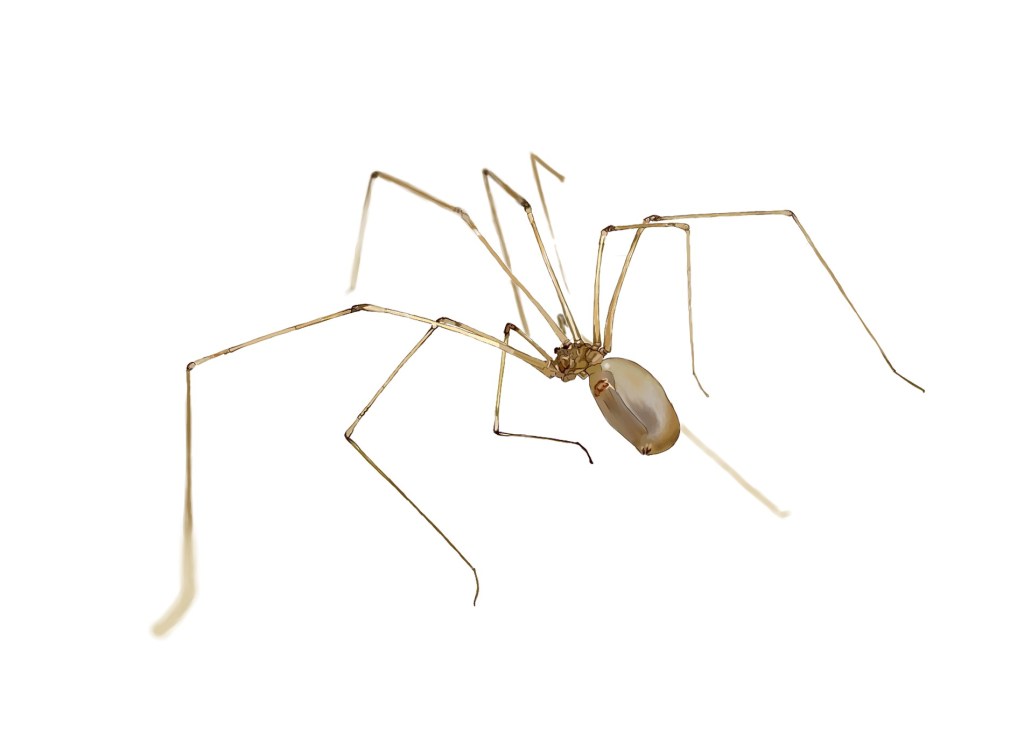
Found in your house, not louder than a mouse. The Arachnida weavers have been spinning their Araneomorphae webs for 386 Million Years. They are well practised by the time Christmas rolls around. Well for the roughly 46’700 spider species that make webs, 5’600 species have opted out of such frivolities, the rest prefer to remain a mystery. Without further ado allow me to present the fantastically whimsical festive weaving of the familiar Pholcidae, otherwise known as cellar spiders.
The tricks to hanging things.
Sometime you want that floating effect, spiders have this down pat, with their webs being thin and translucent making them hard to see. You may end up walking into these threads and getting a little stuck if you’re as small as a fly but otherwise they are perfect for hanging small objects. And water drops.
But often you want to hang something a bit more substantial, this is when you need support frames. Spider’s understand this, using radii to support the spiralling part of the web, or in the case of Pholcus phalangioides, to support the tangled breakdown that makes up their cobwebs. The outer part of the web is sticky and used to capture flies, but for your purposes can support suspiciously fly shaped decorations. Sometimes using sticky tape or command strips is necessary especially if you’re living in rented accommodation or simply don’t want to commit to nails. Securing thicker lines of string in the form of radii and then using those to attach more decorations, a line of flies or snowflakes will do, is also a perfect use of the spider web method.
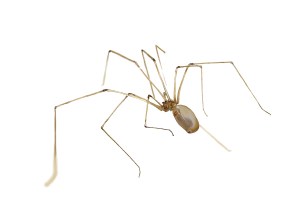
Strength is also a key factor, you want something that will last the period of Christmas, so having strong threads is a must. Spiders are a varied bunch, they even use different types of webbing for different preposes. Keeping it traditional, the cellar spiders, otherwise known a daddy long-legs (not the flying kind) and vibrating spider (Pholcus phalangioides), has a web type classed as cobwebs they are a form of sheet webbing and are created to cover a wide area with many messy threads. We are not a corporation trying to show we have a soul or a rich heiress obsessed with immaculate vibes, slightly messy decorations are part of the christmas spirit.
Spider silk is know for its strength, this is largely to do with it’s molecular structure. The silk glands secrete proteins that will then be decorated with fibres by aligning nematic molecules (disc shaped molecules) parallel to or perpendicular to the proteins. The crystalline bio-fibres mean that the webbing is elastic, water resistant and strong; Enabling them to last the christmas period.
Merry Making
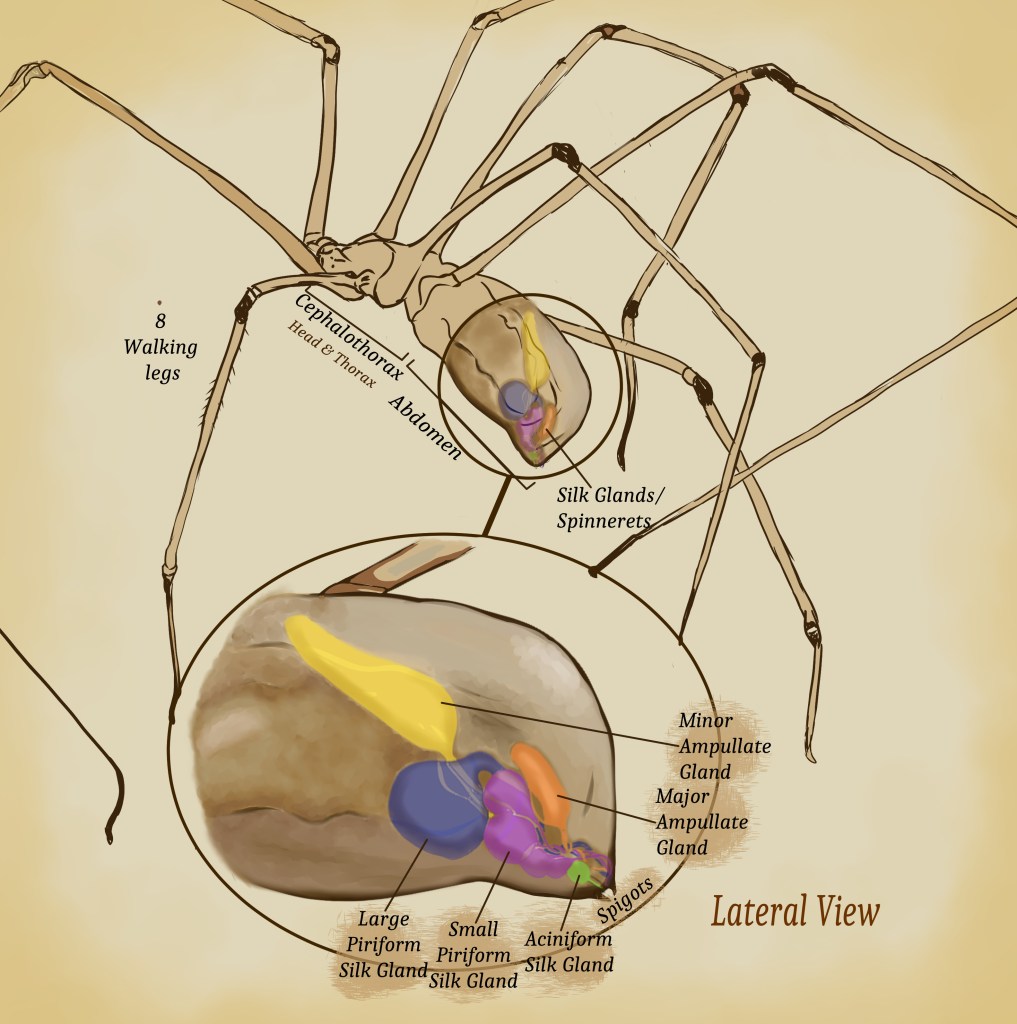
There are seven types of silk gland; cylindrical glands, aggregate glands, flagelliform glands, major ampullate glands, minor ampullate glands, aciniform glands and piriform glands, if you’re interested.
Fortunately for you, you do not need all of them to be a perfectly spinning cellar spider. Just five. Although you should know that unlike with most spiders our dear Pholcus has smaller major ampullate glands than minor ampullate gland. This coupled with the delicate forming of fibres from the spigots, and tiny glue silk gland (aciniform gland), gives you a fine and not particularly sturdy threads, so make sure you aren’t hanging anything that will be subjected to high winds or a lot of wear and tear. Each of these silk glands produces slightly different amino acids (Proteins), each fulfilling a different mechanical role. If I went into detail of these molecules the article would become fairly incomprehensible but if you take a spin down to the Eisoldt paper you’ll find the nerdiness you seek.
Now since it’s Christmas turning yourself into a spider may be ill advised. Especially if you are seeing extended family and friends who are less than thrilled with spiders, or maybe it’s the perfect reason. Or simply ask one of these cellar spiders for a favour, they’re one of the few species that have evolved to live in human made structures like houses, sheds and barns. I’m sure you’ll be able to find one who knows you well enough to do this Christmas favour for you.
Until next time dear reader, have a lovely winter-tide and have a great life.
For the Curious
Aguirre, L. E., de Oliveira, A., Seč, D., Čopar, S., Almeida, P. L., Ravnik, M., Godinho, M. H. and Žumer, S (2016) "Sensing surface morphology of biofibers by decorating spider silk and cellulosic filaments with nematic microdroplets", Proceedings of the National Academy of Sciences, 113(5), pp. 1174-1179. doi: 10.1073/pnas.1518739113.

Eisoldt, L., Smith, A. and Scheibel, T., (2011). Decoding the secrets of spider silk. Materials Today,14(3), pp.80-86 doi:10.1016/S1369-7021(11)70057-8

JACKSON, R. and BRASSINGTON, R. (1987) "The biology of Pholcus phalangioides (Araneae, Pholcidae): predatory versatility, araneophagy and aggressive mimicry", Journal of Zoology, 211(2), pp. 227-238. doi: 10.1111/j.1469-7998.1987.tb01531.x.

Roush, R.S. and Radabaugh, D.C., (1993). Web density is related to prey abundance in cellar spiders, Pholcus phalangioides (Fuesslin)(Araneae: Pholcidae). Bull. Br. Arachnol. Soc, 9(5), pp.142-144.

Uhl, G., Huber, B.A. and Rose, W., (1995). Male pedipalp morphology and copulatory mechanism in Pholcus phalangioides (Fuesslin, 1775)(Araneae, Pholcidae). Bulletin of the British arachnological Society, 10(1), pp.1-9.
 Wonderfully Weird