

In a land of ogre battles and fairy kings sometimes a little guidance is needed for the mammalian masses. Fellow primate and old fashioned simiiforme, the tarsier takes inspiration from the past, in the form of one of the oldest models of primate still alive today. Tarsilidae are no hominids, they’ll live many decades less than you’re sapien self, and run the risk, starvation of being eaten, and dying from exposure. However, they seem relatively content on Instagram. What more evidence do you need to take on their lifestyle habits?

Fitness
By evolutionary standards, we are marathon runners. That doesn’t stop homo sapiens from being weirdly obsessed with swimming, climbing, jumping and giving meaning to weird squiggled on a page. If you want to excel at something, you have to fundamental change your anatomy and physiology.
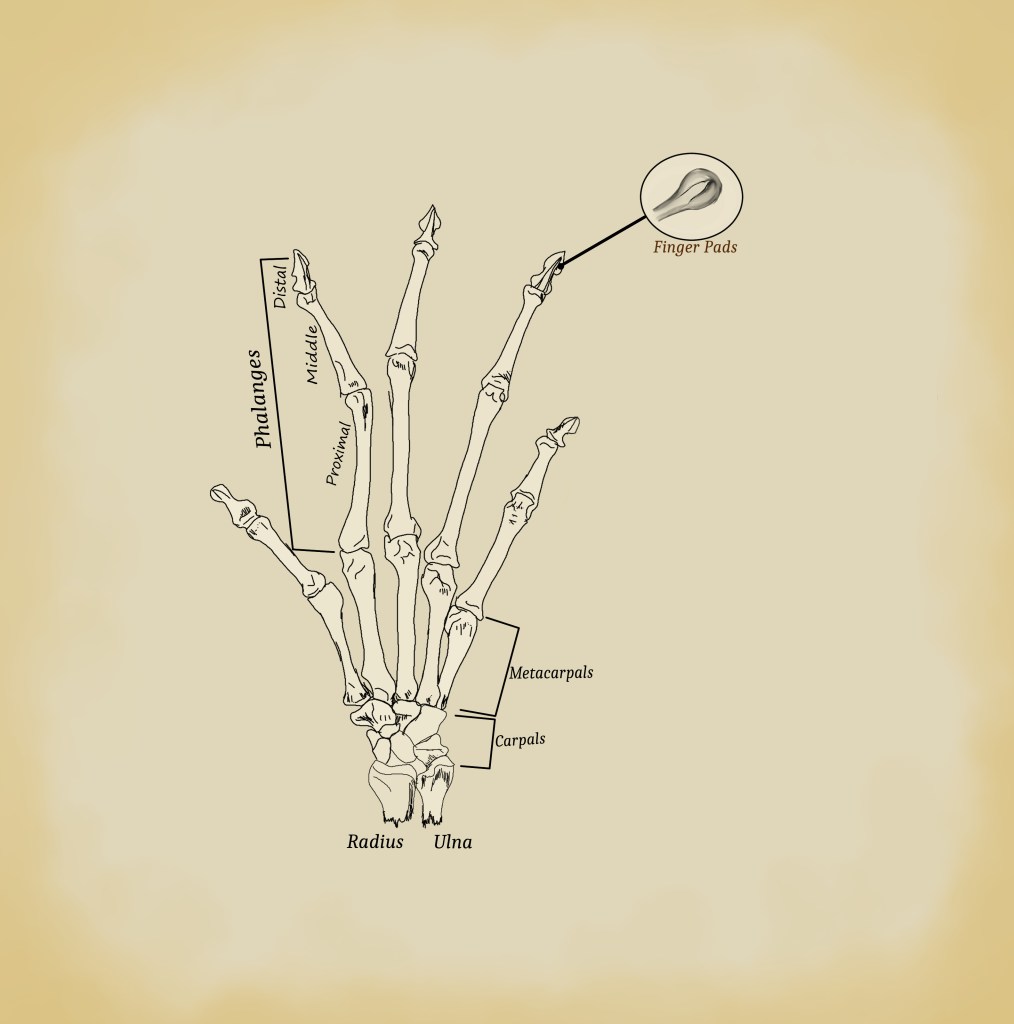
Tarsiers and therefore you, have chosen clinging and jumping as your skillset. Arborists or the average explorative 10-year-old, have an advantage. For the rest of you, aim for the basics; a prehensile tail, grasping hands with disc-like figure pads help with grip along with dexterous feet. Less weight to distribute through flimsy branches is always a good idea when jumping from one to the other so being roughly the size of a tennis ball also helps.
Like with most locomotion, the anatomy of jumping is in the legs and arms. Human legs are worth about 10.5% of your body weight, including all those heavy-duty bones. Tarsier legs are worth 12% with just thigh muscle. To help stabilise this sheer mass of henchness the tibia and fibula are fused, aiding strong muscle attachments, and enabling the bones to take repetitive force.
Elongated tarsal is in your name. Specifically, the navicular and calcaneum. Elongating these rather than the metatarsals mean that dexterity and grasping aren’t compromised, so you can still grab things with your feet like tree branches, gymnastic poles or a cup of tea. Creativity is a virtue.
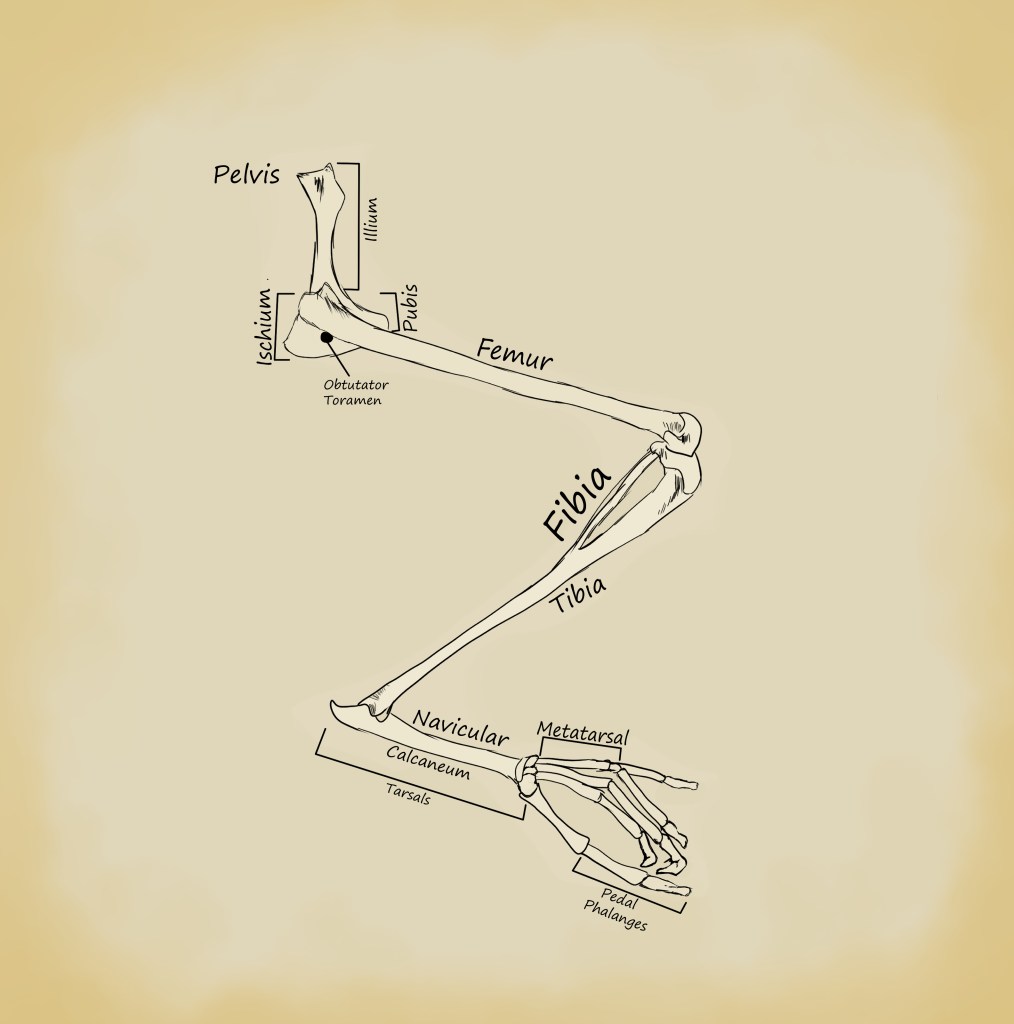
It helps that you are a tiny gremlin well under 10kg. An important adaption, if jumping from tree to tree is what brings you joy. Geometric morphometrics maps the forces on your pelvic girdle. So, I can tell you which aspects of your pelvis you should pay attention to. Your marathon running days will tragically be over but, your vertical clinging and jumping days will replace them. The forces on your pelvic girdle and femur are low enough to allow this due to morphological adaptations to spread those forces. You’ll need a wider ilium than you do currently. Particularly the lower-ilium that connects to the pelvic girdle. This morphological trait isn’t specific to tarsiers. Not significantly anyway. All that being said, Geometric morphometric modelling is still in its early stages.
Jumping being your only way of catching food or avoiding predictors also helps to keep you incentivised once you start this fitness journey. I propose we make supermarkets a more active place, introducing climbing apparatus would improve lives. And maybe end some, but what’s life without a little risk?
A little risk is fine, but blindness is not best. Binocular vision, a set-up you already have will help you judge distance. Although, get used to tilting and rotating your head like a confused border collie pup, as those big yellowy-brown eyes can’t rotate in their sockets. The internals of the eye are of a nocturnal persuasion, they lack of cones and are bigger than your brain so… focus on fitness, not physics. You share many morphological features with homo sapien eyes. Features like Fovea centralis allow you can pick out details. Details such as insects.
Diet
Humans are weird. Our omnivorous nature means we can eat most things without much issue, although most of us should give up dairy after the age of 12, chocolate, yoghurt and cheese are delicious and for some populations of human in the past, necessary for survival. Meat or spinach, we can eat it. Improving our lives often revolves around what food we allow ourselves. Given that it’s just as helpful and keep your biological processes in mind just as much as any other diet on this hell-scape we call the internet, here is the perfect diet from a tarsiers perspective.
If you follow the tarsier’s system as well as its diet, your gastrointestinal system will need some tweaks. Keep it short and simple. In structural terms, it’s a simple globular stomach, a small intestine, short conical cecum, and a simple smooth-walled colon. You’ll also have to eat a lot. Tarsiers have a high Basal Metabolic Rate (BMR), meaning you’ll need more calories per pound of body weight. Get munching.
You’ll need to stay on the small tennis ball size due to the jumping and forces as mentioned, but staying under 500 grams also keeps you within the Kay’s threshold. Basically running a body over this threshold gets tricky when only eating insects. So if you follow this diet only do so if you’ve successfully matched the measurements of this tiny mammal. Not just the body plan.
Gastrointestinal system aside, let’s talk physiology. The food itself is perfectly edible with or without sectorial teeth but, it makes life so much easier to have the proper tools. I don’t care how versatile your teeth are. Get yourself some exoskeleton-piercing sectorial ones. Digestion and processing nutrients is another matter. Tarsiers absorb 60-90% of the food they eat, to reach this level of efficiency, change your physiology. Tarsiers have several CHIA genes. Some have three others have five paralogues of a gene responsible for releasing an enzyme called acidic mammalian chitinase (Amcase), which breaks down otherwise indigestible exoskeletons.
Your sense of taste will also shift, but this is what happens when you make lifestyle changes. Sometimes it’s neuroplasticity. Sometimes it’s evolutionary divergence. Your taste receptor complex will be less reactive to L-glutamates, unlike the human you once were, and more reactive to 5ʹ-ribonucleotides. Basically your sweet-tooth is gone forever. The taste receptor complex is more of an evolutionary shift than brain plasticity, so get comfortable with it. No more spinach. No more chocolate. There is only insects meat now. Maybe the occasional small reptile or amphibian.
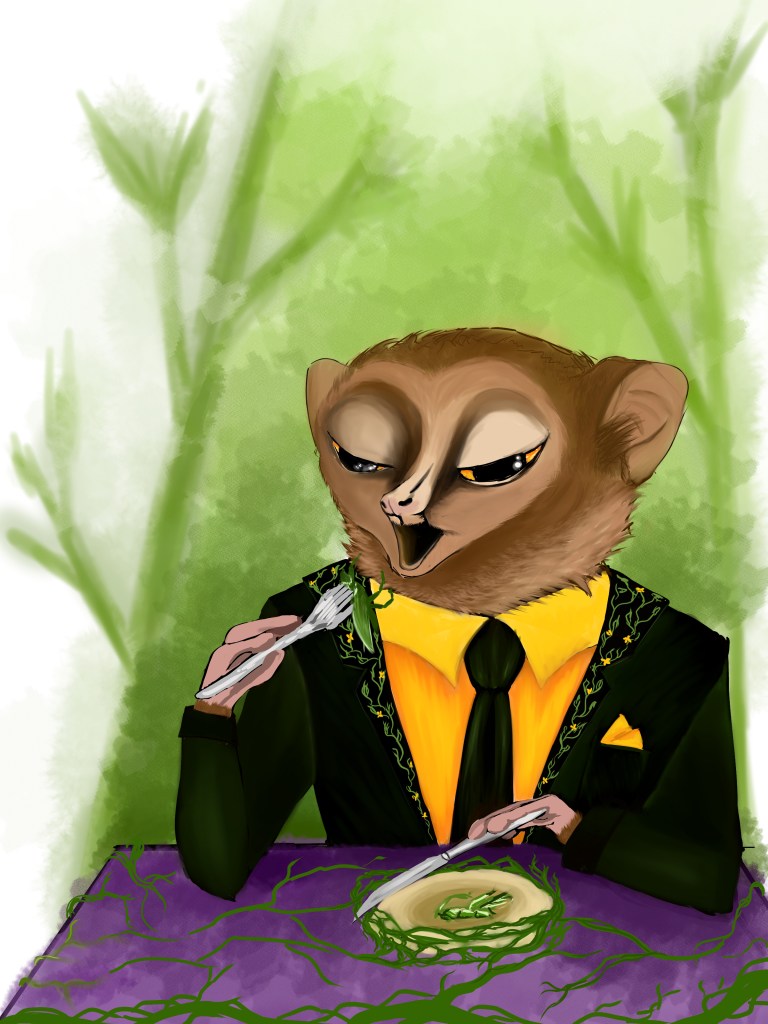
Ultrasonic hearing may help with catching such delectable dinners, it also means you have a language that goes largely unheard to humans, but this isn’t the only difference regarding social interactions.
Social life
Humans can be complex and hard to predict. They live in ways their evolution hasn’t quite prepared them for, and that wonderful adaptive brain can sometimes malfunction as a result. This adaptiveness also means there are a lot of variations in their social networks, leading to misunderstands and sometimes aggression. Don’t get me started on their insistence on being imaginative. Tarsiers don’t need complex social groups. They don’t live in huge, sprawling communities. At most, you’ll live in small family groups like spectacle tarsiers (Tarsius spectrum). Other species live in pairs, and some spend most of their time in solitude, so you have some choices, but your social group will rarely be larger than 10, most of whom are family members.
For those of you who are here for fitness and diet, not friends and dialogues there are Philippine (Carlito syrichta) and Bornean tarsiers (Cepalopachus bancanus) who prefer a more hermited existence. Just find somebody to love when you need somebody to love and then move on until you want somebody to love again. Singing in the woods is the best method for such things, and because of the low levels of social interaction you don’t need much of a vocal lexicon, it’s all about confidence, jumpin’ and ultrasonic serenading.
Until next time dear reader, have a nice day and have a great life.
For the Curious
Boyer DM, Seiffert ER, Gladman JT, Bloch JI (2013) Correction: Evolution and Allometry of Calcaneal Elongation in Living and Extinct Primates. PLOS ONE 8(9): DOI:10.1371/annotation/77784e61-3a43-4615-85bd-b6b4369568fd.
Emerling, C.A., Delsuc, F. and Nachman, M.W., 2018. Chitinase genes (CHIAs) provide genomic footprints of a post-Cretaceous dietary radiation in placental mammals. Science advances, 4(5), p.eaar6478. DOI: 10.1126/sciadv.aar6478
Janiak, M.C., Chaney, M.E. and Tosi, A.J., 2018. Evolution of acidic mammalian chitinase genes (CHIA) is related to body mass and insectivory in primates. Molecular Biology and Evolution, 35(3), pp.607-622. doi.org/10.1093/molbev/msx312
Lewton, K.L, 2015. Pelvic form and locomotor adaptation in strepsirrhine primates. The Anatomical Record, 298(1), pp.230-248. doi.org/10.1002/ar.23070
Toda, Y., Hayakawa, T., Itoigawa, A., Kurihara, Y., Nakagita, T., Hayashi, M., Ashino, R., Melin, A.D., Ishimaru, Y., Kawamura, S. and Imai, H., 2021. Evolution of the primate glutamate taste sensor from a nucleotide sensor. Current Biology. doi.org/10.1016/j.cub.2021.08.002
 Wonderfully Weird
Leave a comment