
Life advise from a phylum that has survived 500 million years. The species that has ridden on spacecraft and thrived in the deepest ocean vents. From the Cambrian to the Anthropocene. From deserts to miniature jungles of moss. They’re destined is to be survivors, and now I shall share their secrets with you.
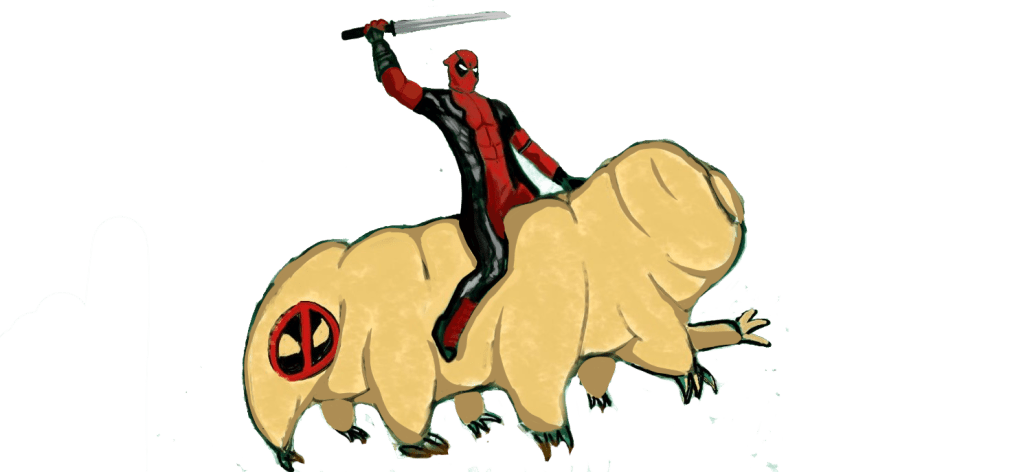
Becoming a tardigrade
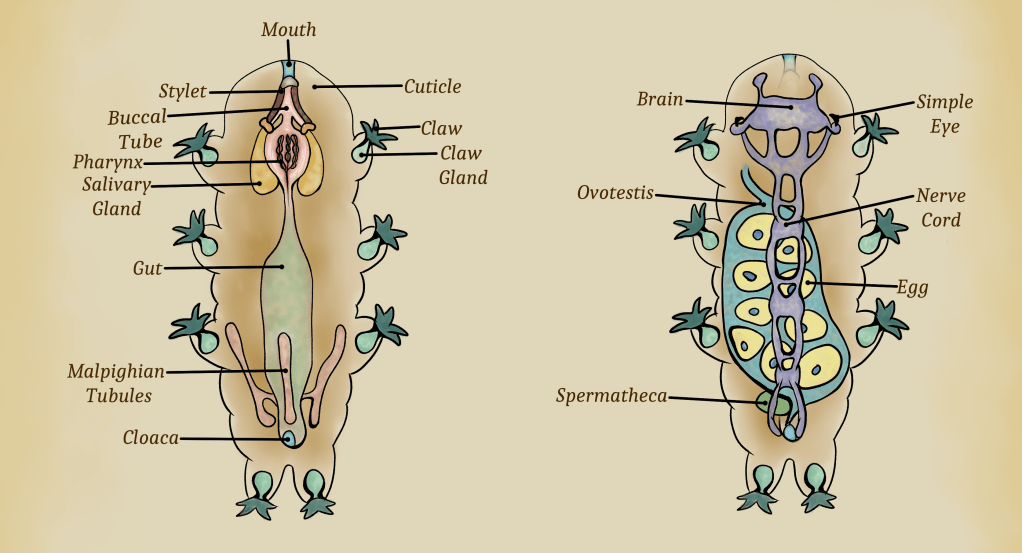
The Tardigrade. A Pig-like caterpillar-ish creature so small that all the photographs you see of them are through microscopes that I can only dream of affording.
So first off embrace that tiny dumpy body and pig-like features, so long as it’s not too animal farm, and become one with a sleeping bag, ensuring room for eight stumpy little legs. You may not have legs like Beyoncé but you’ll be a survivor. Also, convince everyone that you aren’t pig-like, but bear-like. This is much better PR because people will think more about their teddy bears. Public response is key when surviving in a world of humans. It’s tricky but you’ll bring people around to seeing you how you wish to be seen.
Size may be an issue. The smaller you are the fewer resources you require because your body is less expensive to run. The fewer resources you need the more likely you are to survive through anything anywhere. Any famine, any drought, any school. Also, don’t be a mammal. Homeostasis is fine, but so limiting, sometimes it is best to cut this basic nonsense and indulge in chemobiosis, anoxybiosis, a little encystment, a sprinkling of cryobiosis or anhydrobiosis, maybe some osmobiosis. Variety is required for survival.

Your new physiology
Next step. Don’t be like those vertebrates. You know the ones, stuck in their air-breathing closed circulatory system ways. If you want to survive, get an open one. Transporting oxygen through body cavities, using diffusion and osmosis and the like, is proved to be way more popular within the organism community. Hearts can fail, arteries can block. So if you are as heartless and dead inside as your dear author you should find this easier.
Lifehack: Dance. Sometimes diffusion isn’t enough so you’ve got to move like no one is watching, (which should be a given if you’ve made yourself less than a mileometer long) dancing should help move fluid around those cavities if you’re feeling sluggish and faint.
How to deal with going outside
Be prepared. Maybe there’s a heatwave, a drought, or a solar flare that dries out the earth. If you want to be able to put your little eight legs up and watch the solar flares and auroras dance across the sky in peace listen to your brethren.
So, what is a little water-dependent microorganism to do? Many tardigrades recommend pushing out all moister from the body. Leaving you as dry and empty as those after nearly two decades of schooling find themselves. Pushing out almost all this water will enable you to wait as a torpid tardigrade for better conditions. It is not recommended to perform this advanced level of self desiccation unless 90% Tardigrade, as trying to enter anhydrobiosis as a human will result in death. Some of these species can also curl up around water molecules preventing them from expanding, therefore preventing cells from rupturing. Curling up in the fetal position and making yourself a husk of a human being until the environment that you have no control over gets better has also been known to work in a similar fashion.
At the opposite end of the spectrum; the cold stretches of the Antarctic may cause water molecules to freeze and rupture your cells, instead of being such a mammal about it and stopping this from happening by maintaining a consistent internal environment 37ºC above freezing (35.8ºC if you’re me), learn to repair your cells. This is also useful if you dry out for too many months. Nucleated agents and sugar may also help to encourage the ice crystals to form outside of your cells.
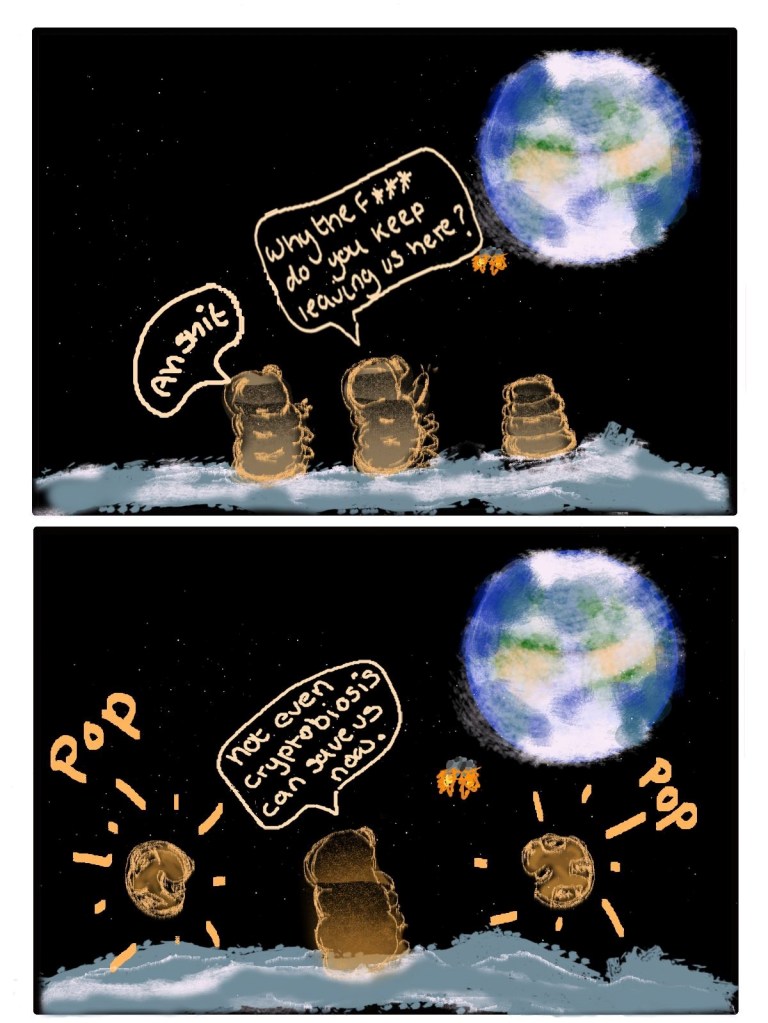
And finally: What to do if you get jettisoned into space? The vast vacuum of nothing, don’t tell the astrophysicists. Tardigrades have survived and reproduced in space, so you can stop bragging about your mile high club pass. For a human this environment is… shall we say suboptimal. Your blood would boil. Your lungs would collapse, generally things that result in death that not even TV levels of CPR would bring you back from. Radiation and pressure being some of the dangers. But if you want to be the best tardigrade you can be then you should survive long enough to repair the damage made to your cells…they’re still quite vague on how. Emulate the magnanimous Milnesium tardigradum and you’ll be fine.
And the ones that survive went on to survive again, because surviving is a matter of practice.
Terry Pratchett (THE FIFTH ELEPHANT)
Live well my tardigrade friend
And at the end of it all, take it slow. Take it steadily. Eat your greens, the moss and lichen and algae that are now your home as well as your food. Keep yourself alive. There may be droughts and freezing temperatures and weird scientist shot putting you into space, but honey you’ll survive.
Until next time my wonderful reader. Have a nice day and have a great life.
For the curious
Jönsson, K., Rabbow, E., Schill, R., Harms-Ringdahl, M. and Rettberg, P. (2008). Tardigrades survive exposure to space in low Earth orbit. Current Biology, 18(17), pp.R729-R731.

Rebecchi, L., Cesari, M., Altiero, T., Frigieri, A. and Guidetti, R. (2009). Survival and DNA degradation in anhydrobiotic tardigrades. Journal of Experimental Biology, 212(24), pp.4033-4039.

Nelson, D.R., Guidetti, R. and Rebecchi, L., 2015. Phylum tardigrada. In Thorp and Covich's freshwater invertebrates (pp. 347-380). Academic Press. doi.org/10.1016/B978-0-12-385026-3.00017-6
 Wonderfully Weird